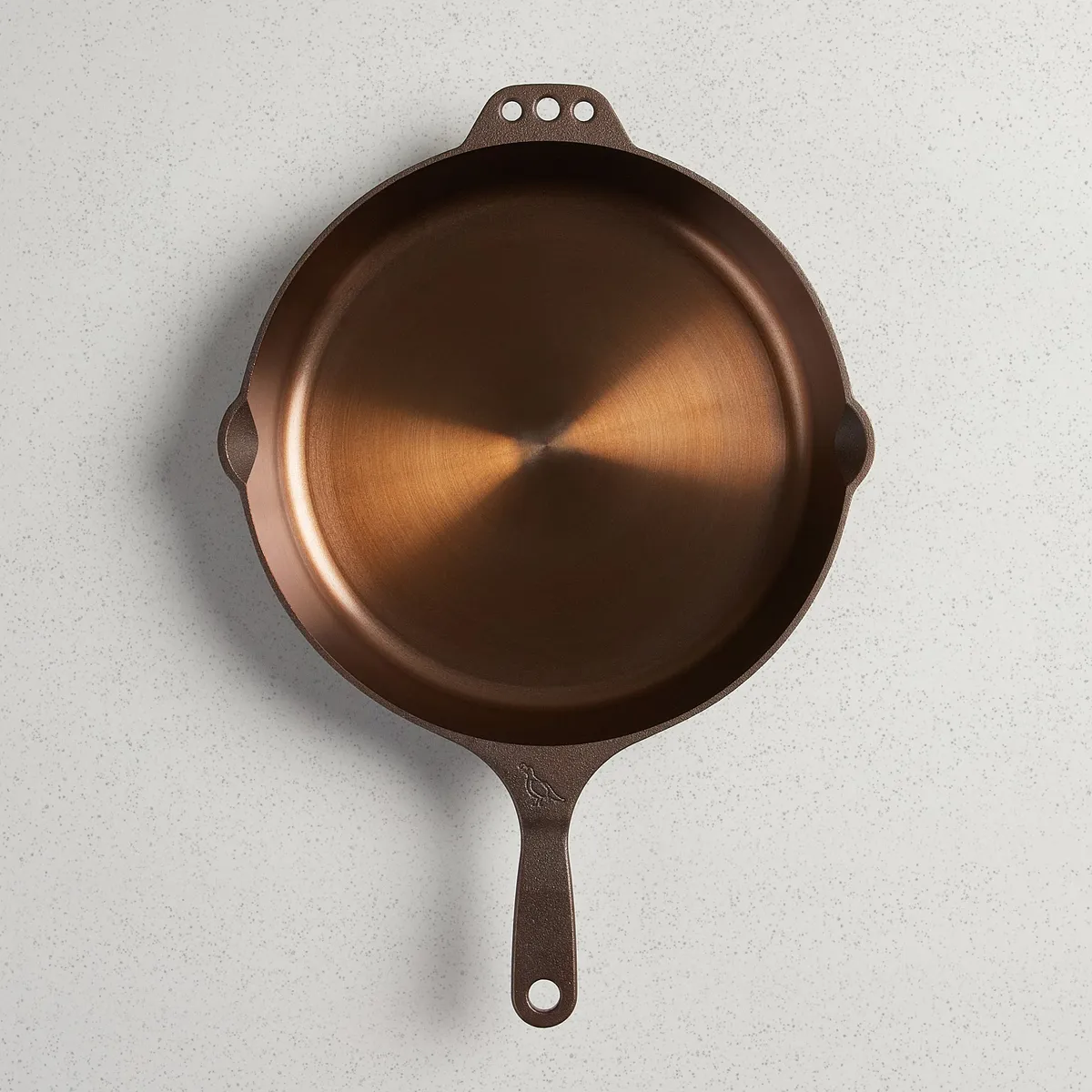
There is a particular kind of guilt that lives in American kitchens, and it weighs about eight pounds.
You bought the cast iron. You meant it. It was going to outlast the kitchen it was bought for, and probably you. Then the first eggs welded themselves to the floor of it, the cleanup turned into a scouring pad and a small argument about whether soap was allowed, and over the following year the pan moved down a shelf. Then into a cabinet. Then behind the stockpot.
A customer of Smithey Ironware put the whole thing in two sentences, in a public review of a nine inch carbon steel skillet.
★★★★★
“Has a permanent home on my stove as I use it daily for everything. … My cast iron has a new home…in a drawer!”
GC, verified review of the Little Farmhouse Skillet, October 18, 2024. Published on smithey.com
Nothing about that person changed. They did not stop loving cast iron. One pan simply asked less of them before breakfast than the other one did, and that was enough to decide which pan lived on the stove and which one lived in a drawer.
This is the uncomfortable arithmetic behind every heirloom claim in cookware. An heirloom is not a material. It is a habit that lasted long enough to become an object with a story attached. And a habit is decided by friction measured in seconds, on mornings when you are already late.
The founder said it out loud, which almost nobody does
Isaac Morton started Smithey in a Charleston woodshed, restoring old skillets and giving them to friends before he ever made a new one. The note he publishes on the company site is not a warranty statement or a brand manifesto. It is an instruction, and it is a strange one to print next to a $220 skillet.
“Don’t let your Smithey dither in a cupboard. Proudly display it on your stovetop. Put it to work! … And when it’s time to pass your Smithey to the next generation, you’ll be all the wiser.”
Isaac Morton, founder. A Message From Isaac, smithey.com
Most premium cookware is sold on the promise that it will survive you. Morton is selling the opposite instruction: use it hard, today, and the surviving takes care of itself. In the same note he lists what he thinks about at night, in order. Surface smoothness comes first. Weight comes second. Both of those show up again later on this page, and both of them are really the same question: how much does this pan ask of you on a Tuesday?
Old cast iron was not rough
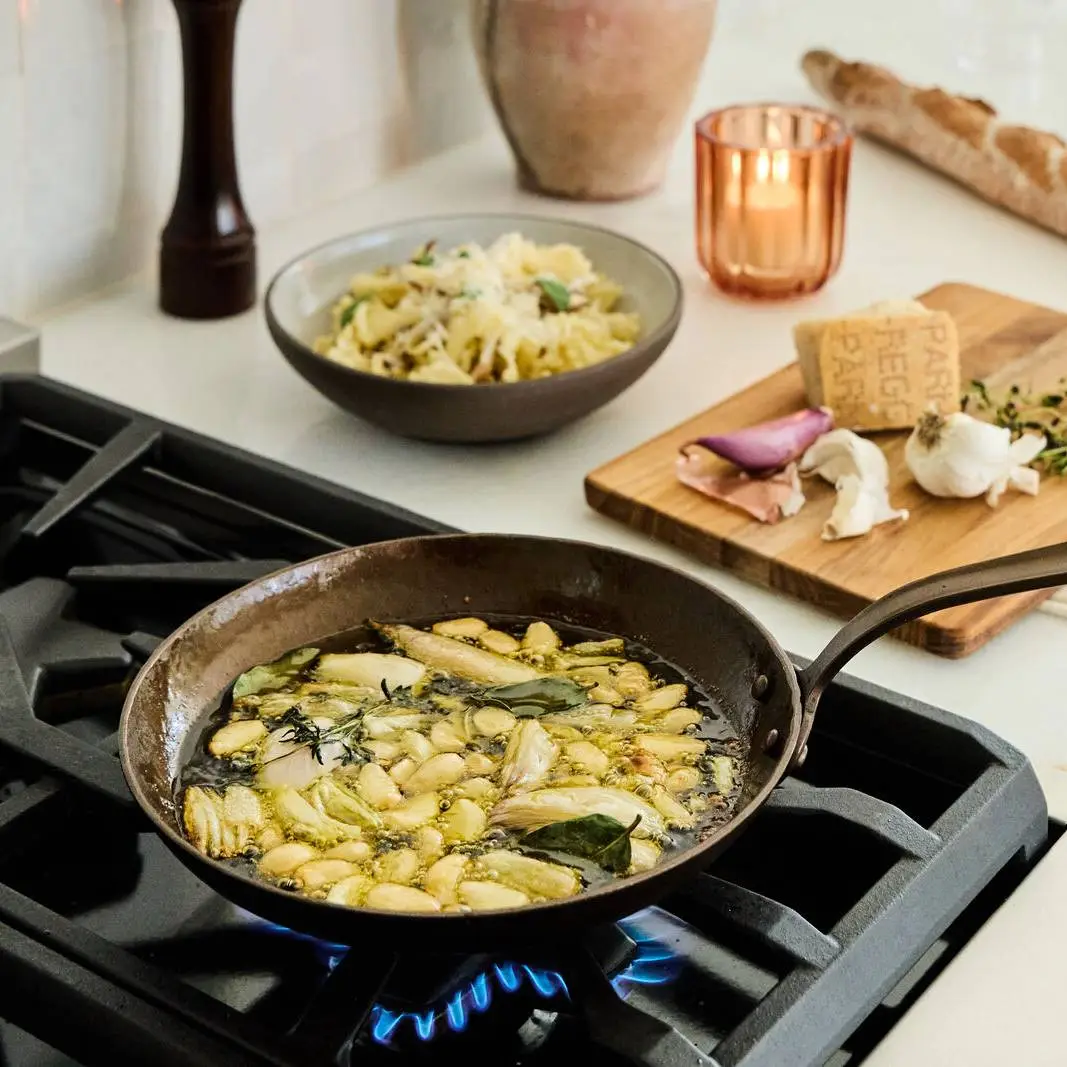
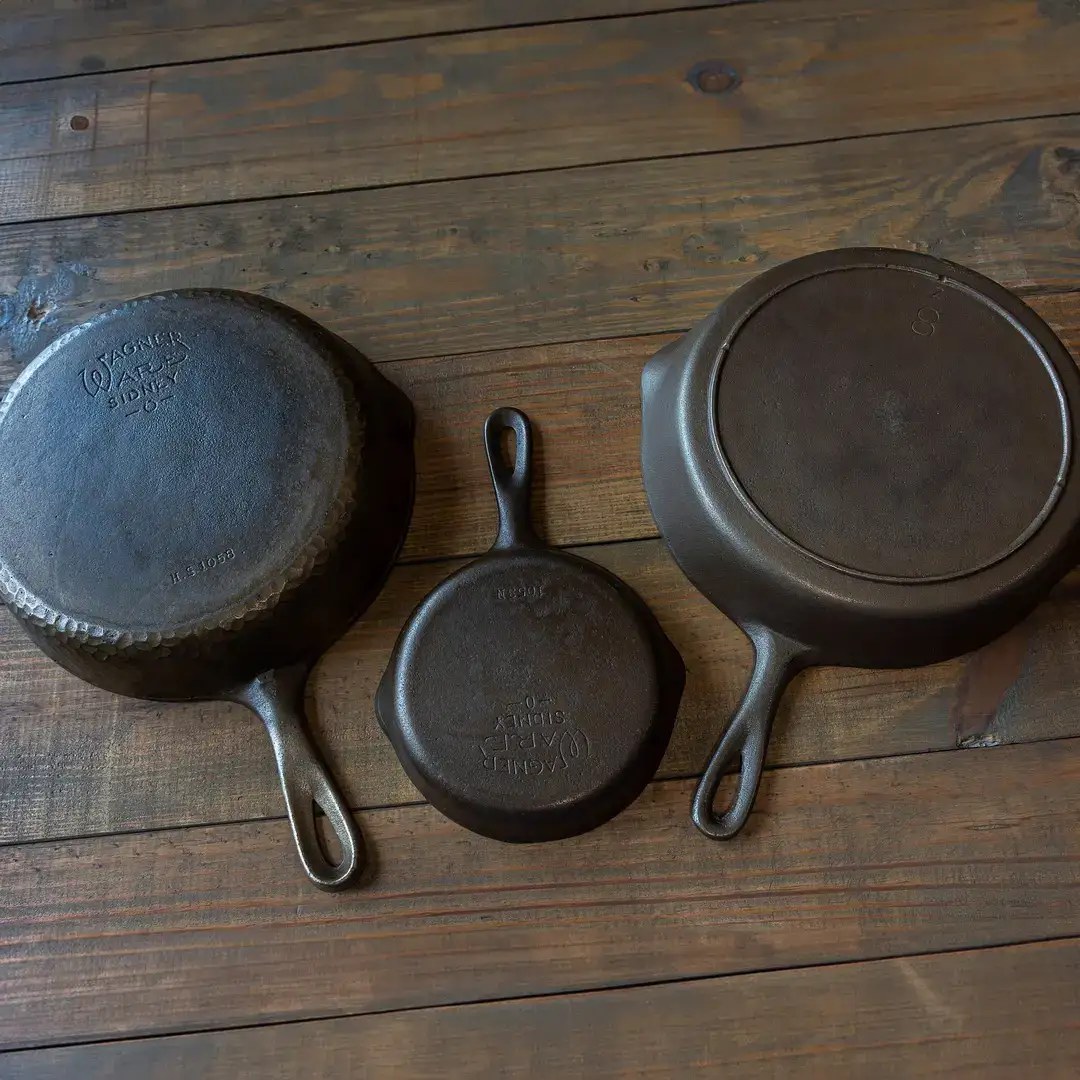
Here is the part that surprises people who grew up with a pebbled black skillet: the antique pans that collectors hunt for are not rough. They are machined, satin, close to a mirror in places. That observation is not a slogan Smithey arrived at later. It is the reason the company exists at all.
“Our founder, Isaac Morton, hatched the idea for Smithey while toying around his woodshed admiring the smooth surfaces and timeless logos of vintage ironware design.”
The Smithey Story, smithey.com/pages/our-story
Sand casting leaves a surface that is a negative of the mold: a landscape of small peaks and pits. The old pans that collectors chase were machined flat after casting. Most cast iron sold today is not, and the reason is not mysterious. Cutting and polishing a cooking floor is a separate operation with its own cost per pan, and the pan will sear a steak either way. What the rough floor costs is invisible on a shelf. It shows up at breakfast.
Why the finish decides breakfast
The seasoning film follows whatever shape is under it. On a rough floor that shape is a set of ridges, so the food layer settles between them and has to be pried loose. On a machined floor there is one plane and one contact line.
This is not a theory a marketing department invented. It is the reason a whole hobby exists around sanding vintage skillets smooth in a garage. One of Smithey’s reviewers has been doing exactly that for years.
★★★★★
“I’ve spent years refurbishing cast iron, and for the pans I personally use, I typically sand them to achieve a smoother finish. However, the Smithey skillet’s quality surpasses my own sanding and restoration efforts.”
Joseph N., verified review of the No. 10 Skillet, February 29, 2024. Published on smithey.com
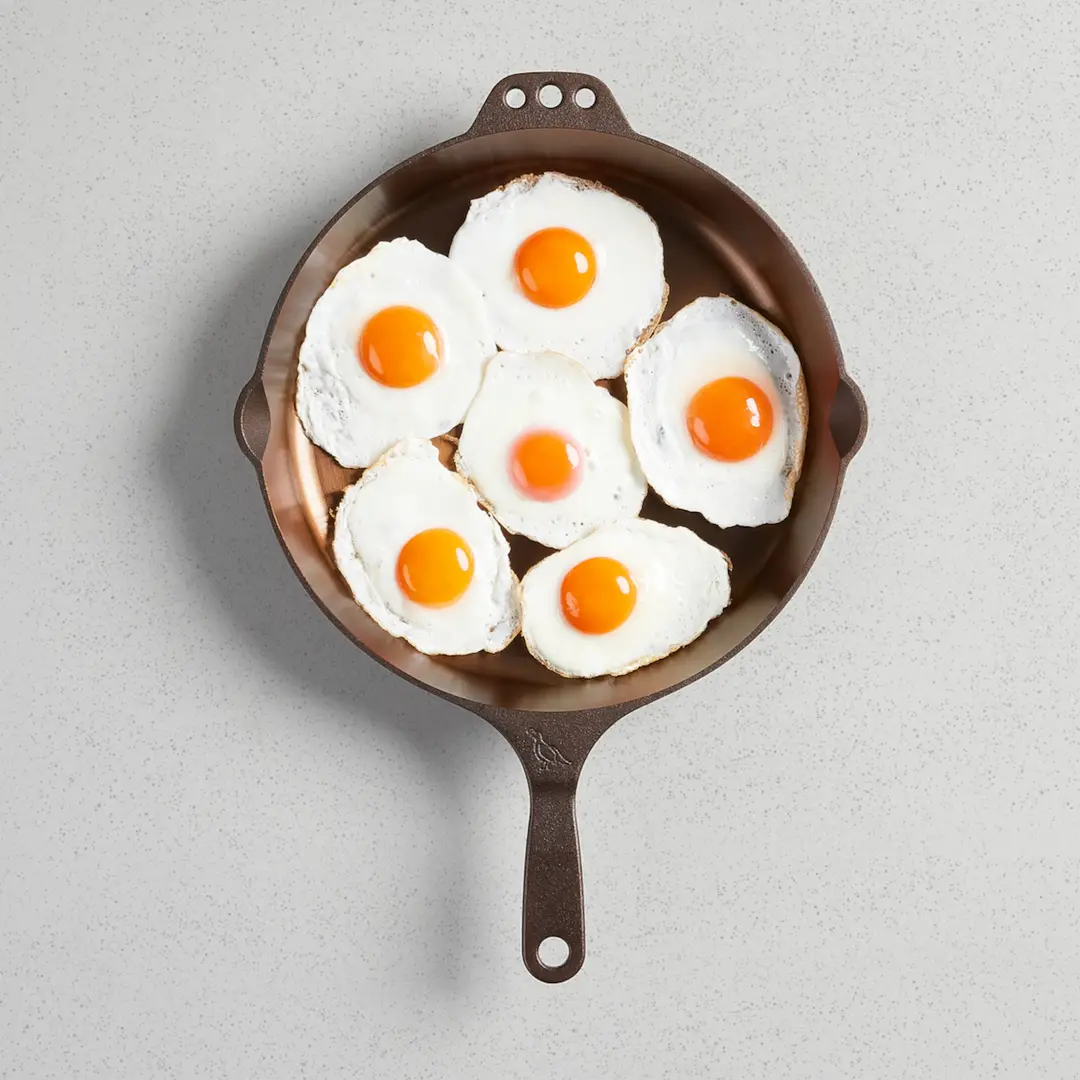
What a flat floor does to a Tuesday
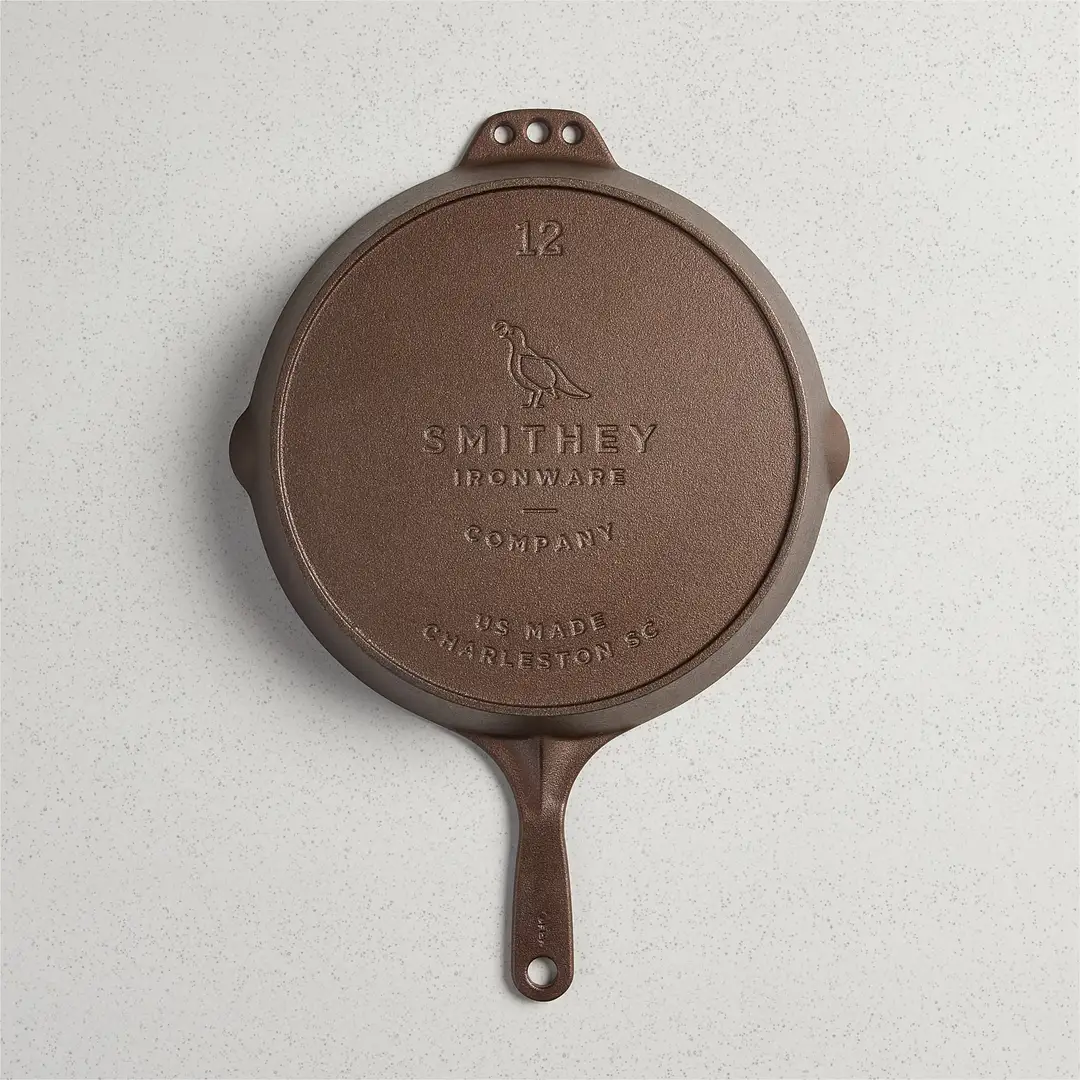
In its cast iron skillet review, last updated in June 2025, America’s Test Kitchen names the Smithey No. 12 its winner. The one sentence they used to explain it is worth reading twice, because it is entirely about the surface and not at all about the iron.
“Silky-smooth from the get-go, this roomy pan didn’t let food stick and stayed impressively slick throughout testing.”
America’s Test Kitchen, The Best Cast-Iron Skillets, updated June 24, 2025
Eggs come up in 363 of the 5,841 published customer reviews on smithey.com. Not because eggs are interesting, but because eggs are the honest test. A pan can sear a ribeye and still be a bad pan, since a ribeye releases itself. An over easy egg tells you the truth about a cooking floor in ninety seconds.
★★★★★
“Love the vintage feel of the machined smooth cooking surface. … My fried eggs slide around the pan like they are on wet ice. Don’t rush your seasoning. Build it slowly with very thin layers of high smoke point oil and your pan will have an incredibly smooth, non-stick cooking surface.”
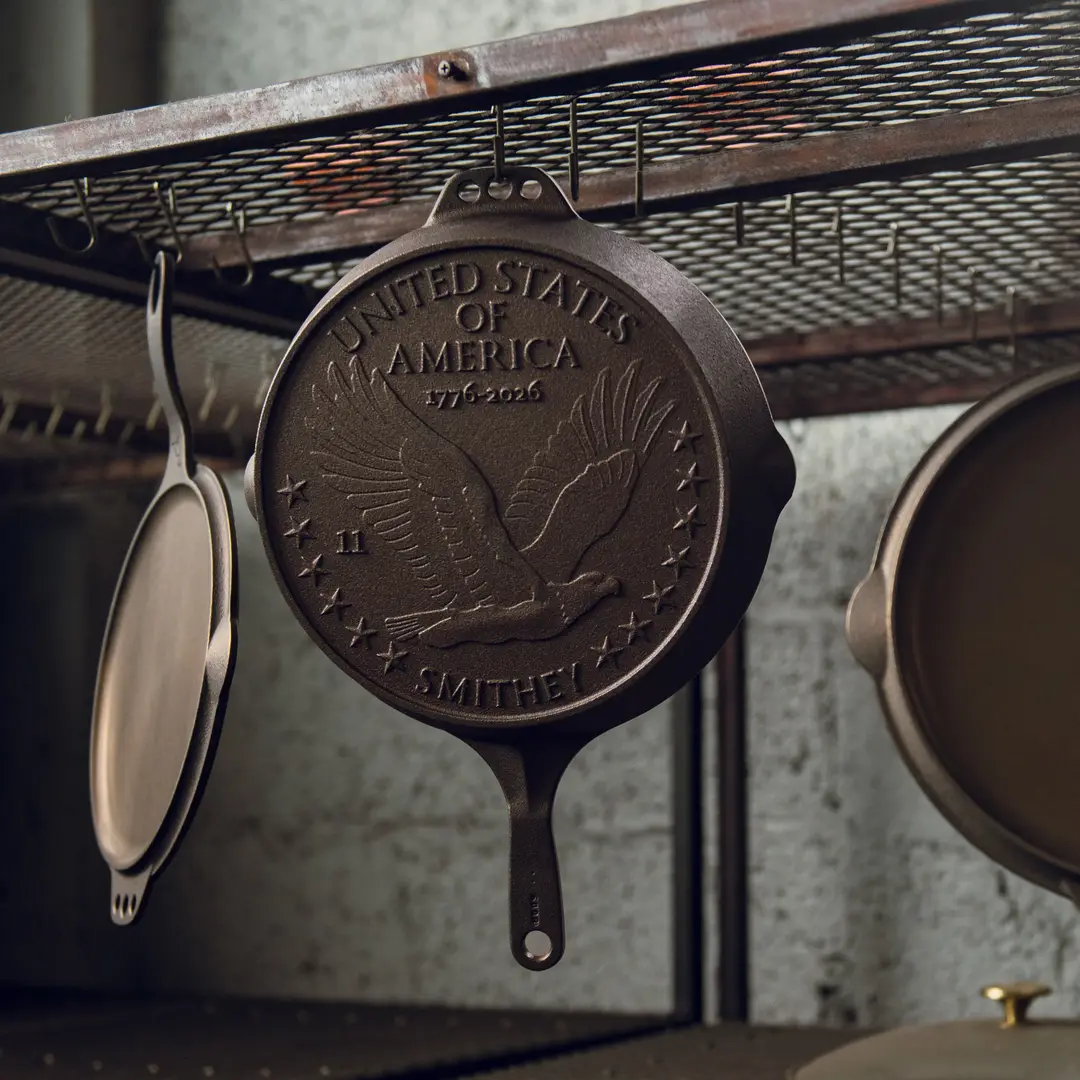
Kevan W., verified review of the No. 11 American Anniversary Skillet, July 26, 2026. Published on smithey.com
Note the second half of what he wrote. He is not describing a pan that arrived perfect. He is describing a pan that got better, and telling you how to help it. That is the part of cast iron that nobody puts on the box.
The loop that decides where a pan lives
Seasoning is not a coating that is applied to iron. It is fat that has been heated until it stops being fat and becomes a hard polymer bonded to the metal. Every meal you cook adds a fraction of a layer. Smithey writes the instruction in three words on its own care page: use it frequently.
“Use it frequently. The oil from your food keeps it healthy and builds your seasoning over time.”
Smithey care guide, smithey.com/pages/care
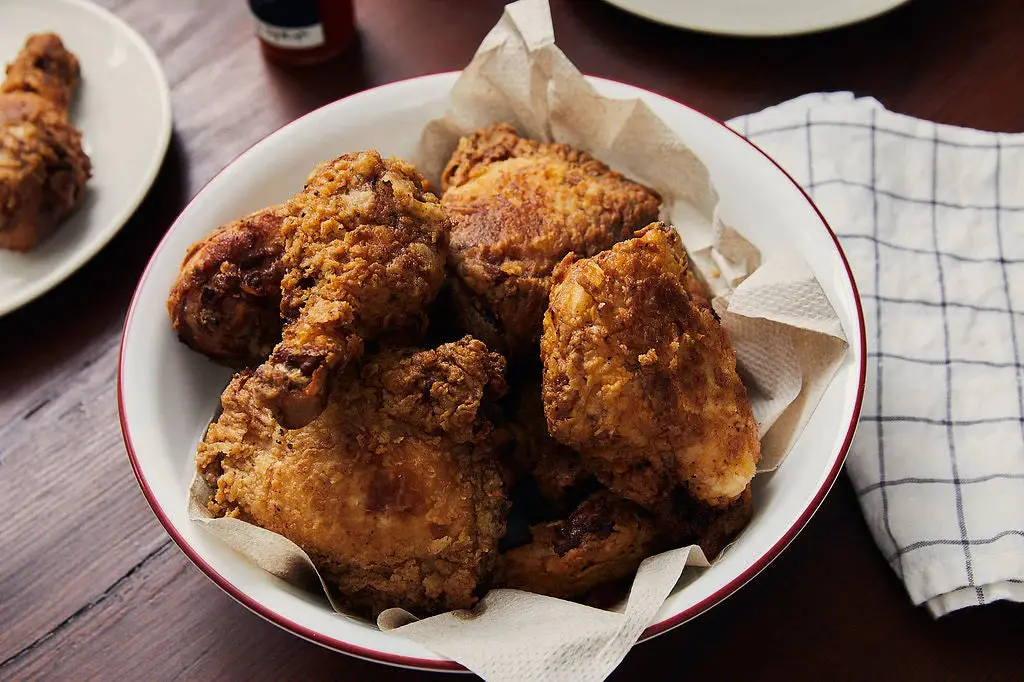
The loop, in four steps
Every arrow here is easy. The loop only has one hard part, and it is the very first turn.
Which is the whole problem with a rough pan. It is not that it never gets good. It is that it is at its worst on the morning you are deciding whether you like it. The loop needs a first turn, and a floor that grips your eggs on day one does not give you one. The pan goes in the cabinet with a young, patchy seasoning and stays exactly that good forever.
A polished floor cheats the start. There is less for food to hold, so the first breakfasts go well enough that there is a second week, and the second week is what actually builds the surface everybody is after.
What the floor does over years of use
An illustration of the change Smithey describes in its own seasoning notes, where regular use develops “a darker, smoother cooking surface over time.” The stages are drawn, not measured.
★★★★★
“It was reasonably good out of the box, but after using it a few times to build up the seasoning, it’s become amazing. My wife cooks eggs on this all the time, with no sticking now.”
Kenneth D., verified review of the Little Farmhouse Skillet, March 13, 2026. Published on smithey.com
Smithey’s own line for this is better than anything a copywriter would write for it: like a classic car or a well-tended garden, your Smithey gives back what you put into it. That is a promise and a warning in the same sentence.
Charleston, and what happens before the pan reaches you
Smithey designs and manufactures in the United States, in Charleston, South Carolina. The pans arrive pre-seasoned with oil rather than any chemical coating. Every piece is inspected by hand more than once on its way through the shop, and the company guarantees the quality of each one for life.
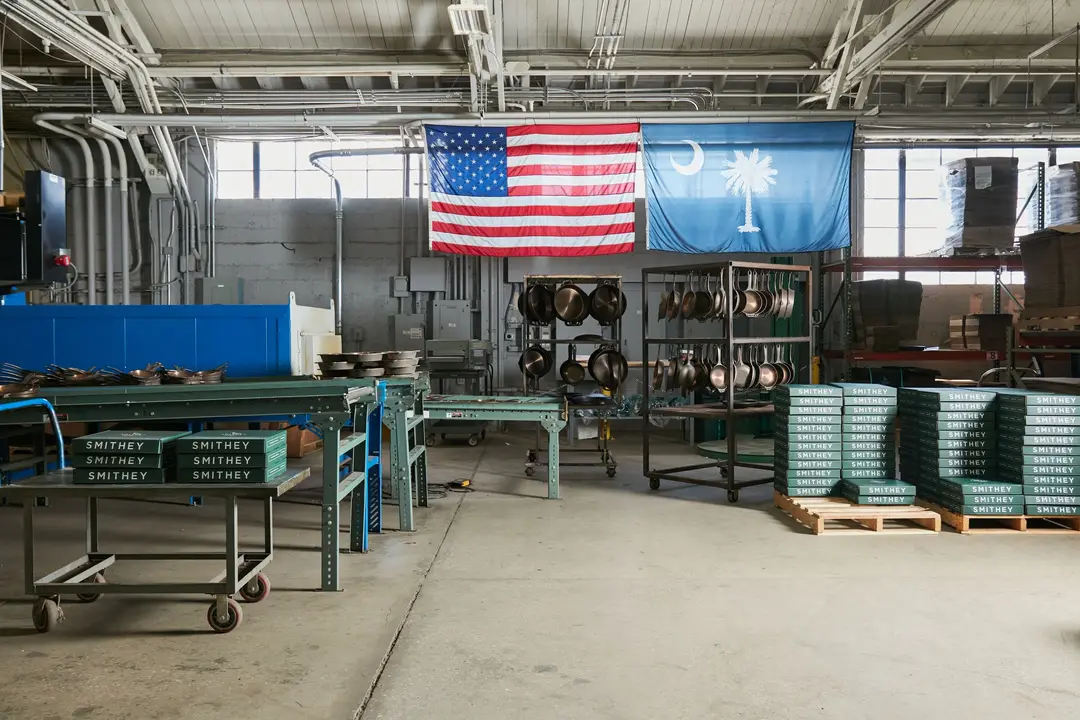
The finishing step is the expensive one and it is the one the company was built around. A raw casting arrives with the mold’s texture on it. Getting from that to a satin cooking floor is machining and polishing, done piece by piece, and it is why a Smithey skillet costs what it costs.
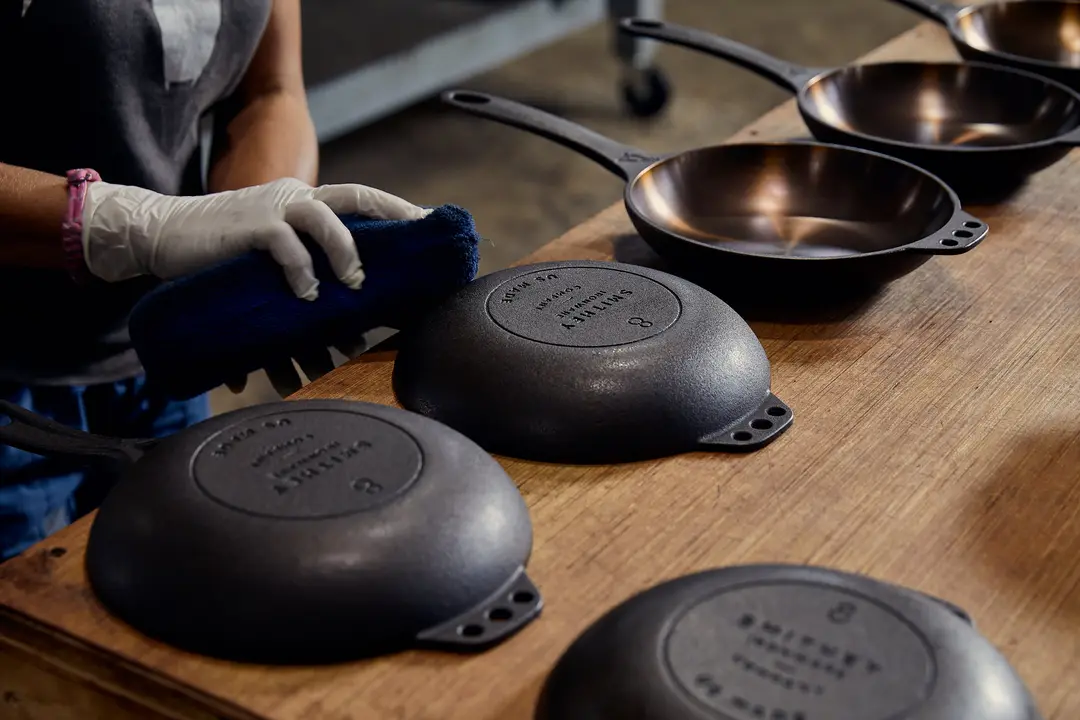
The carbon steel line came later and by a different route. In 2018 Smithey started making hand-forged carbon steel with Robert Thomas, a blacksmith who happened to work next door. Those pieces are forged individually, so no two are identical, and they are noticeably lighter than the cast iron for the same cooking area. The nine inch Little Farmhouse Skillet weighs about 3.1 pounds. That number matters more than it looks, and it comes back in a minute.
- Made inCharleston, South Carolina
- InspectionBy hand, more than once per piece
- Interior finishMachined and polished, then pre-seasoned
- SeasoningOil, free of chemical coatings
- Carbon steelHand-forged individually since 2018
- GuaranteeQuality guaranteed for life
Source: smithey.com product pages and Our Story, as published August 20, 2026.
The real tell is what they sell after the pan
Companies say heirloom. It is a cheap word. The way to check is to look at what a company is willing to do for a customer who has already paid, because that is where the marketing budget stops and the operating cost starts.
Smithey runs a restoration shop. You mail in a pan and they strip the old seasoning, take off the rust, smooth the surface if it needs it, lay down fresh seasoning and mail it back. Two to four weeks. Forty dollars. And the part that gives it away: the pan does not have to be one of theirs.
“Whether it’s a vintage piece or a modern Smithey that needs some love, we can bring it back to life.”
Smithey restoration shop, smithey.com/pages/restoration
Around that sit the other services, and they only make sense if you assume the pan outlives the purchase. Hand engraving, forty dollars, for names and dates. A registry where you record the piece you own. Factory seconds, sold openly with their cosmetic flaws listed, at a No. 12 for $135 instead of $220. None of that is how you behave if the plan is to sell somebody a skillet once.
- Restoration$40, any cast iron, 2 to 4 weeks
- Engraving$40 first line, hand-engraved
- RegistrationRecord the piece you own
- Factory secondsNo. 12 at $135, flaws listed
Prices from smithey.com as published August 20, 2026. Factory seconds
And this is where the heirloom stops being a claim and starts being a thing that happens to actual families.
★★★★★
“I’ve been cooking with cast iron since I was raised in the 70’s by my single father, before cast iron was cool. My father had a skillet that his mother and father owned, and they gave to him when he became a single parent. He still uses it today. The skillet has been around for 80+ years and it looks exactly like it did when I first saw it 40 years ago. So that’s what you’re buying when you invest in fine cast iron cookware… lifetime cookware that you can give to your kids and grandkids and maybe beyond.”
Keith, verified review of the No. 10 Skillet, July 3, 2020. Published on smithey.com
★★★★★
“I place a very high priority on things that will last - and I mean will last for generations long after we are gone. This is the second piece in our growing Smithey collection, and we make sure that our daughters-in-law and our granddaughters know the history behind the Smithey pieces.”
Stephen M., verified review of the Little Farmhouse Skillet, February 9, 2026. Published on smithey.com
What 5,841 reviews say, complaints included
Smithey publishes customer reviews on every product page, filterable by the buyer’s own answers about age and who they cook for. Read across 21 pieces, from October 2019 to this week, the picture is consistent and it is not entirely flattering, which is what makes it useful.
Published reviews on smithey.com
Counted from the review feed published on smithey.com product pages, October 25, 2019 to August 20, 2026.
The buyer profile is unusual, and it is worth a founder’s attention. Of the 1,319 reviewers who volunteered an age, 742 are 60 or older. Of the 1,317 who answered who they cook for, 723 selected the whole family. And of the 1,386 who said why they bought, 1,007 bought it for themselves, against 172 holiday gifts, 27 anniversary gifts and 23 wedding gifts. This is not a registry product being gifted into cupboards. It is mostly people buying their own pan, in the half of life when you already know exactly which pans you use.
Now the complaints. There are 395 reviews below five stars, and they cluster on two things.
Weight, in 38 of those 395
Cast iron is heavy, and a 12 inch skillet sits at the heavy end of it. The No. 12 runs about 8 pounds empty. Full of chicken thighs and headed for the oven, that is a two-handed pan for most people, and a few reviewers say so plainly.
★★★★☆
“The 12 Skillet is very heavy. I can’t lift it when I need to remove it from the burner. But, the skillet does cook extremely well!”
Wanda S., verified review of the No. 12 Skillet, January 14, 2026. Published on smithey.com
★★★★☆
“Machined surface is wonderfully smooth. My only complaint is it is a bit heavier than it needs to be. Hard to move one handed and difficult to pour and toss food.”
Maison F., verified review of the No. 11 Deep Skillet, December 16, 2024. Published on smithey.com
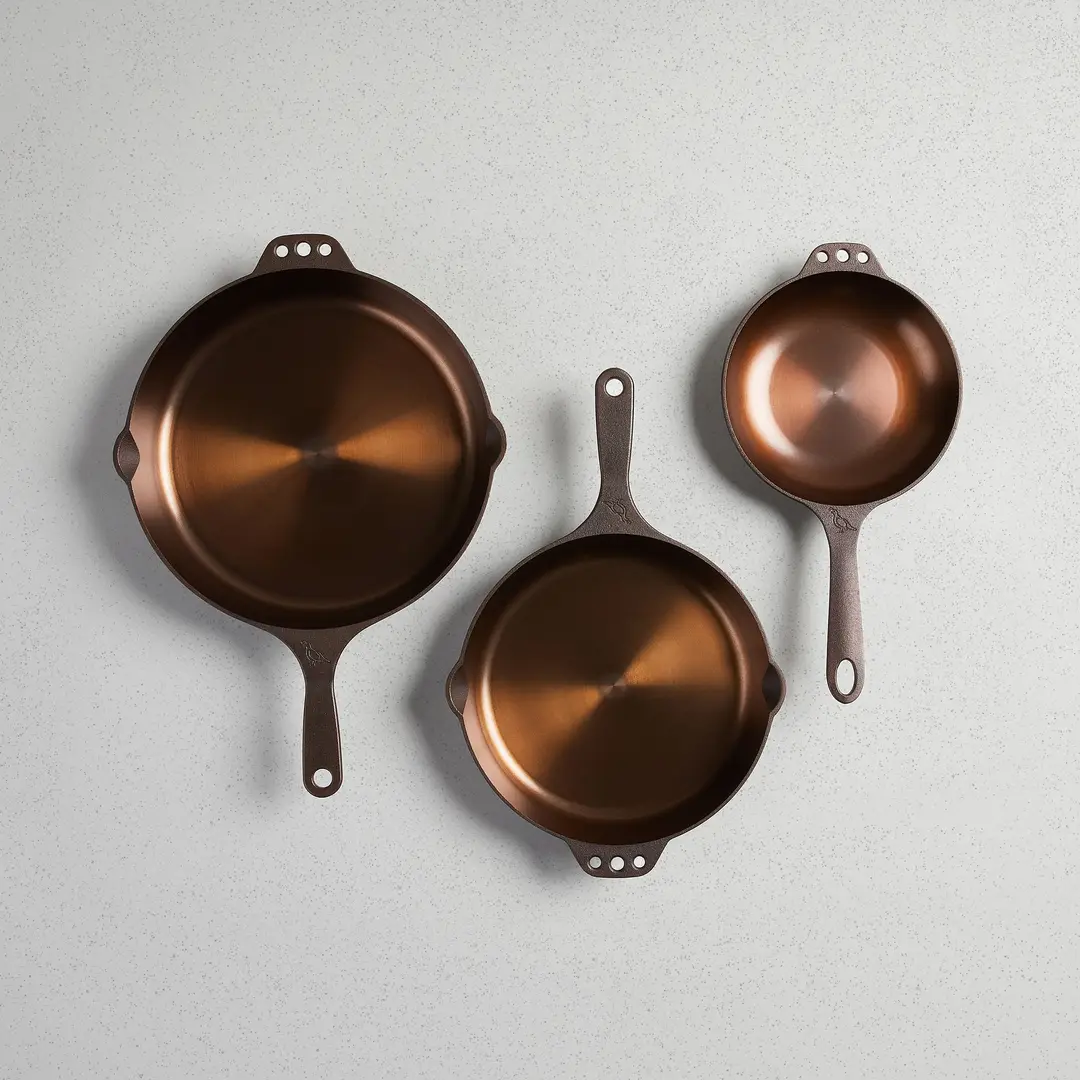
This one is fixable at the point of purchase rather than after it, and it is the single most useful thing to know before you order. Smithey makes a 5.5 pound No. 10 and a 3.1 pound hand-forged carbon steel skillet that cook on the same principle as the No. 12. If a heavy pan is a pan you will not lift on a weeknight, the whole argument of this page says buy the lighter one.
A young seasoning, in the rest
The other cluster is food sticking, which turns up in 90 of the 395. Almost all of it is about the first weeks, before the factory seasoning has been built on, and it is exactly the hard first turn of the loop above.
★★★☆☆
“I was under the impression this would be a good egg pan, can’t make over easy eggs they stick”
Tom M., verified review of the Little Farmhouse Skillet, May 19, 2025. Published on smithey.com
Smithey’s own answer to this is thin layers and patience, not a heavier hand. Its seasoning guide asks for a layer of oil so thin you could almost miss it, then heat until it smokes, then one more thin layer. Too much oil at once is the classic way to end up with a sticky, uneven surface that behaves worse than bare iron.
A pan that goes on to be handed down is not a pan that never gave anybody trouble. It is a pan that was worth the first three weeks.
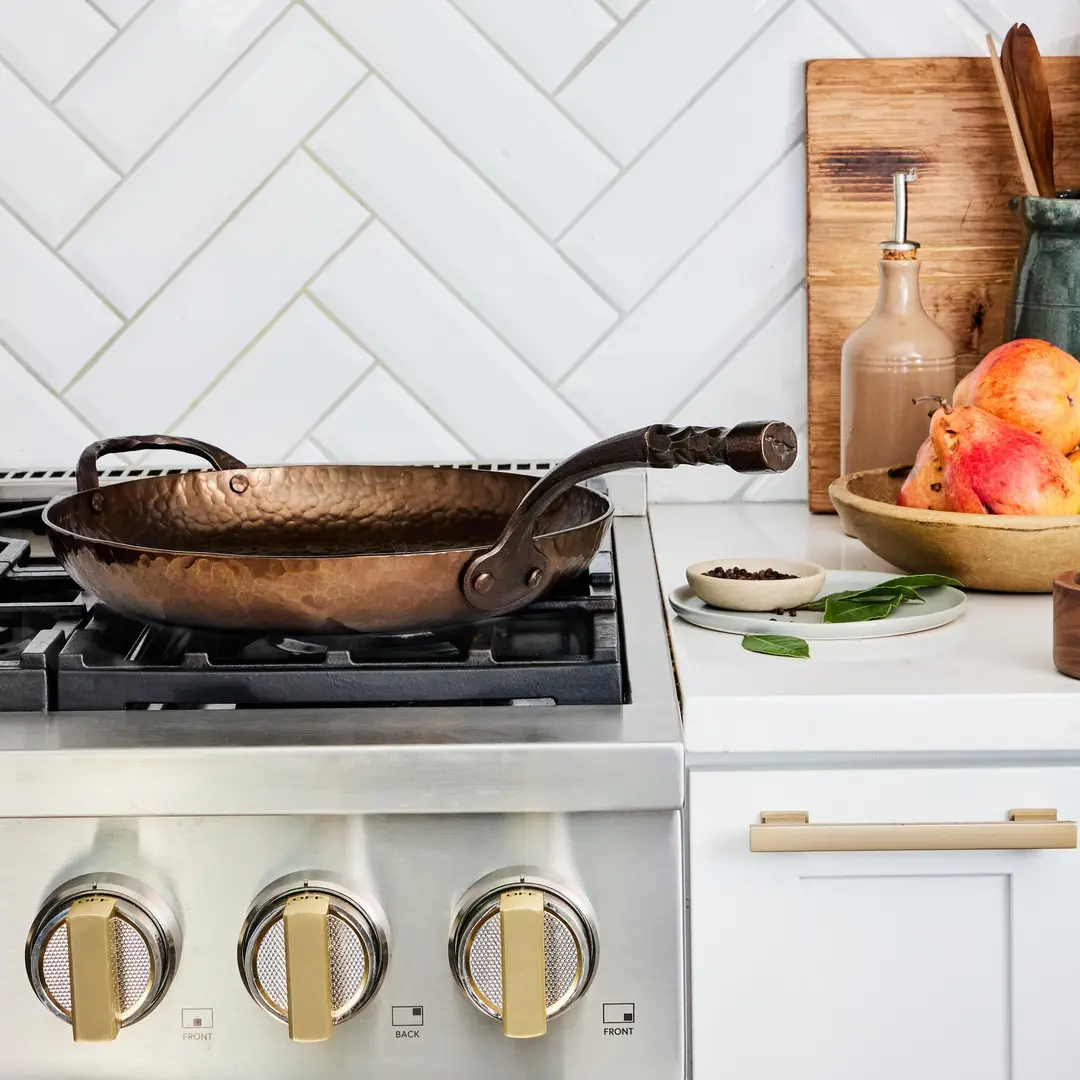
Which one belongs on your stove
All of them have the same machined interior. The only real questions are how much pan you need and how much weight you are willing to pick up on a weeknight.
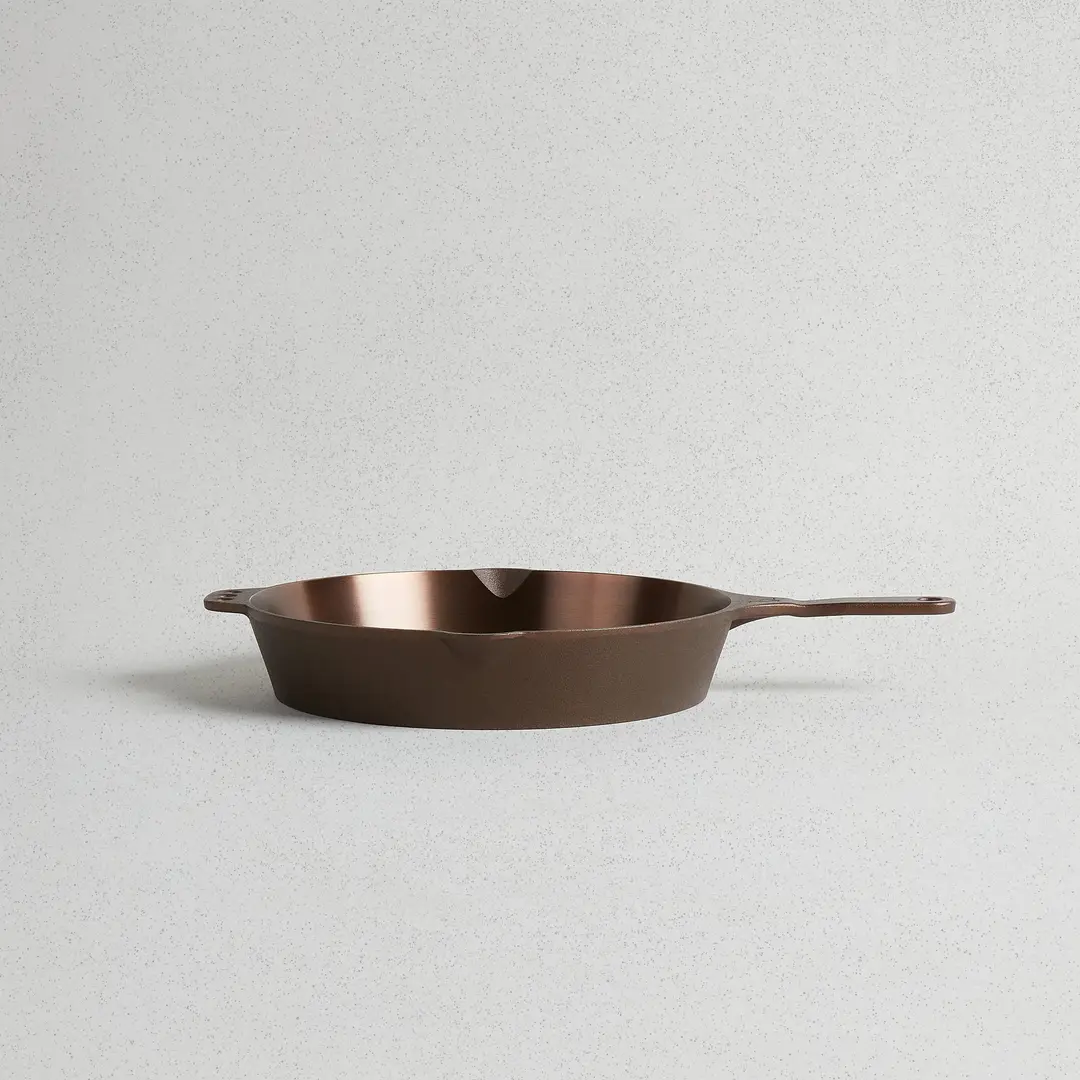
No. 12 Skillet
$220
The one America’s Test Kitchen picked, and Smithey’s best seller. Right for a family of four or for cooking with leftovers in mind.
12” top · 10.5” cooking surface · about 8 lbs · pour spouts both sides
See the No. 12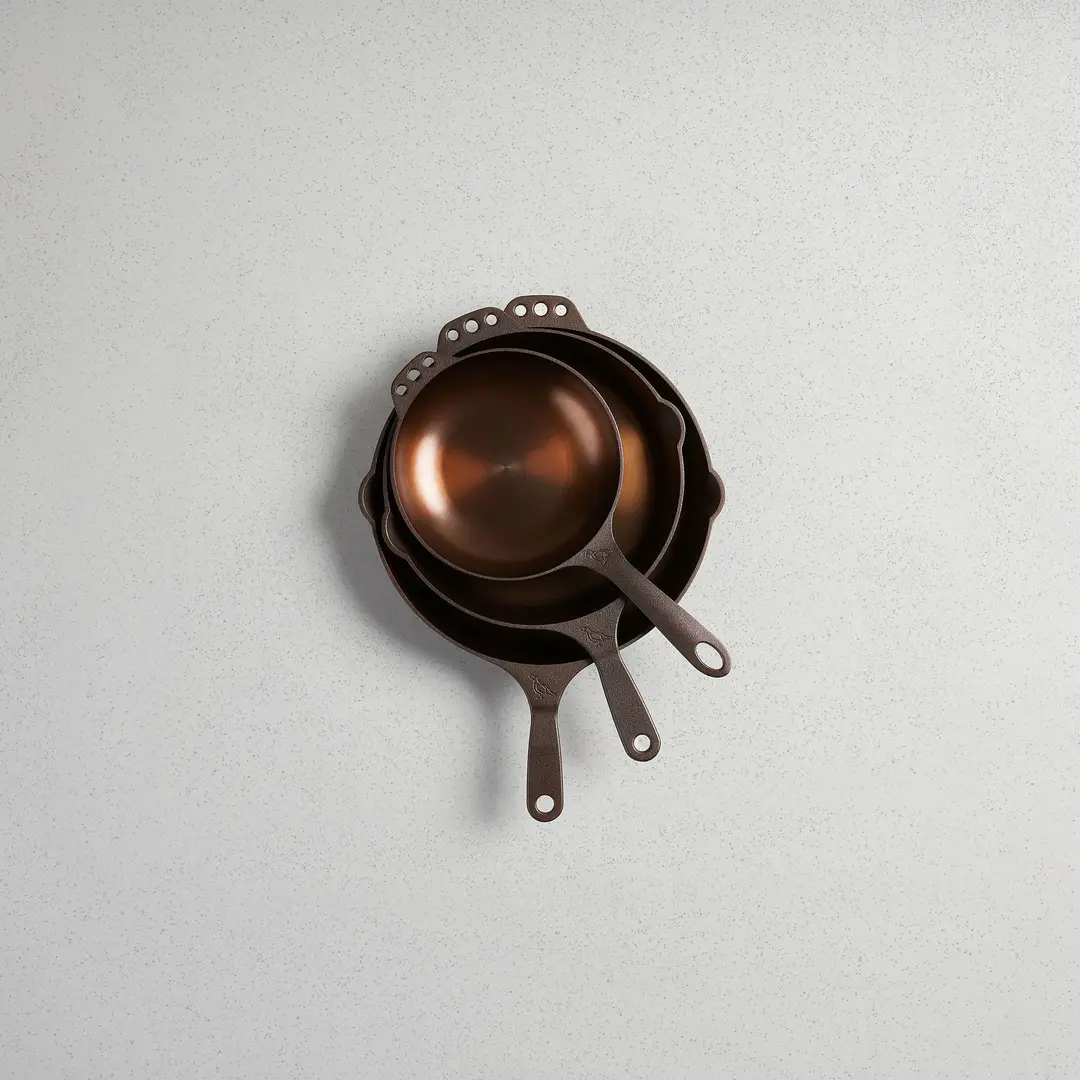
No. 10 Skillet
$180
The first pan the company ever made, and two and a half pounds lighter than the No. 12. If the weight complaints above worried you, start here.
10” top · 9” cooking surface · about 5.5 lbs
See the No. 10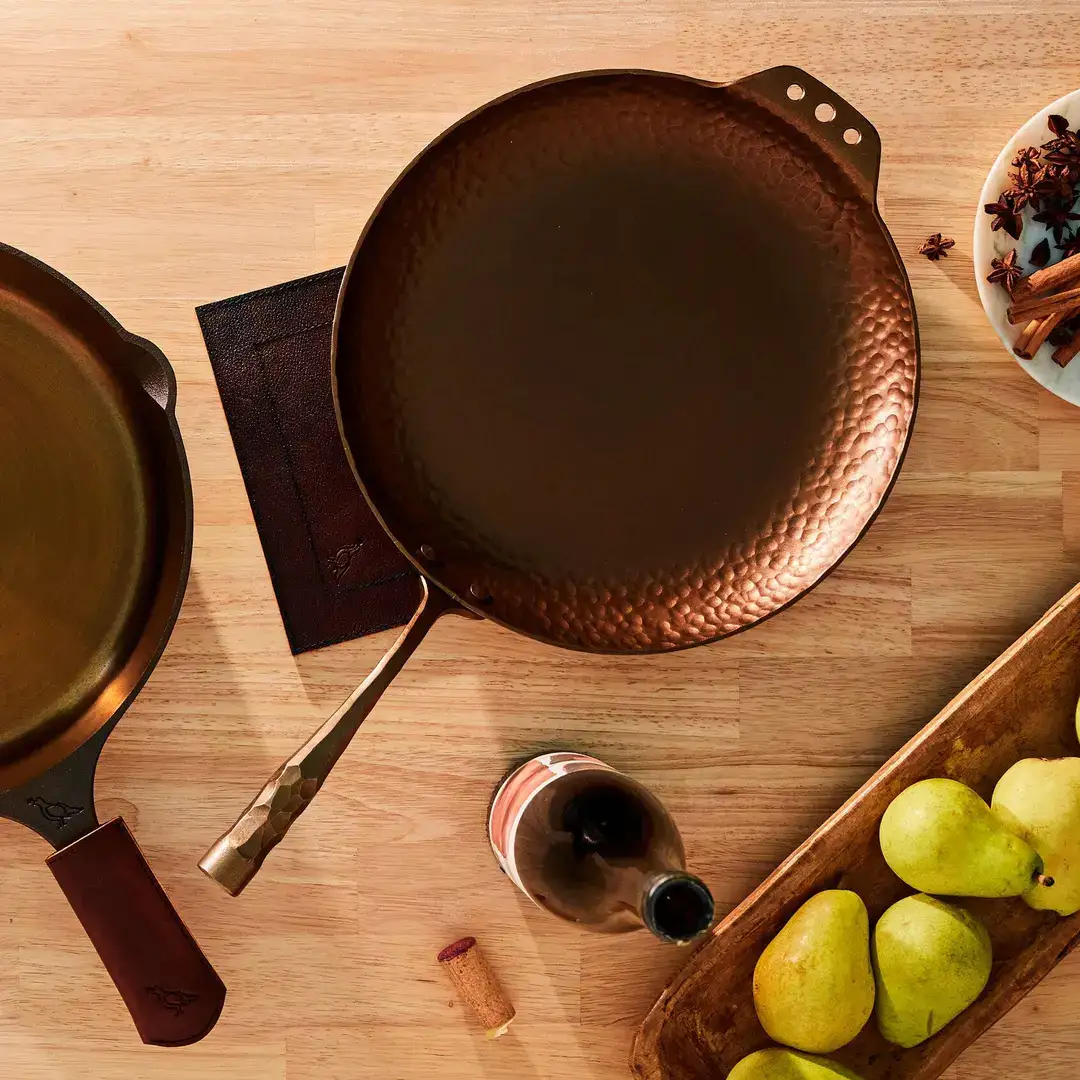
Little Farmhouse Skillet
$200
Hand-forged carbon steel, 3.1 pounds, made for eggs and single portions. This is the piece reviewers keep calling their daily driver.
9” top · 1.5” deep · about 3.1 lbs · cared for like cast iron
See the Little Farmhouse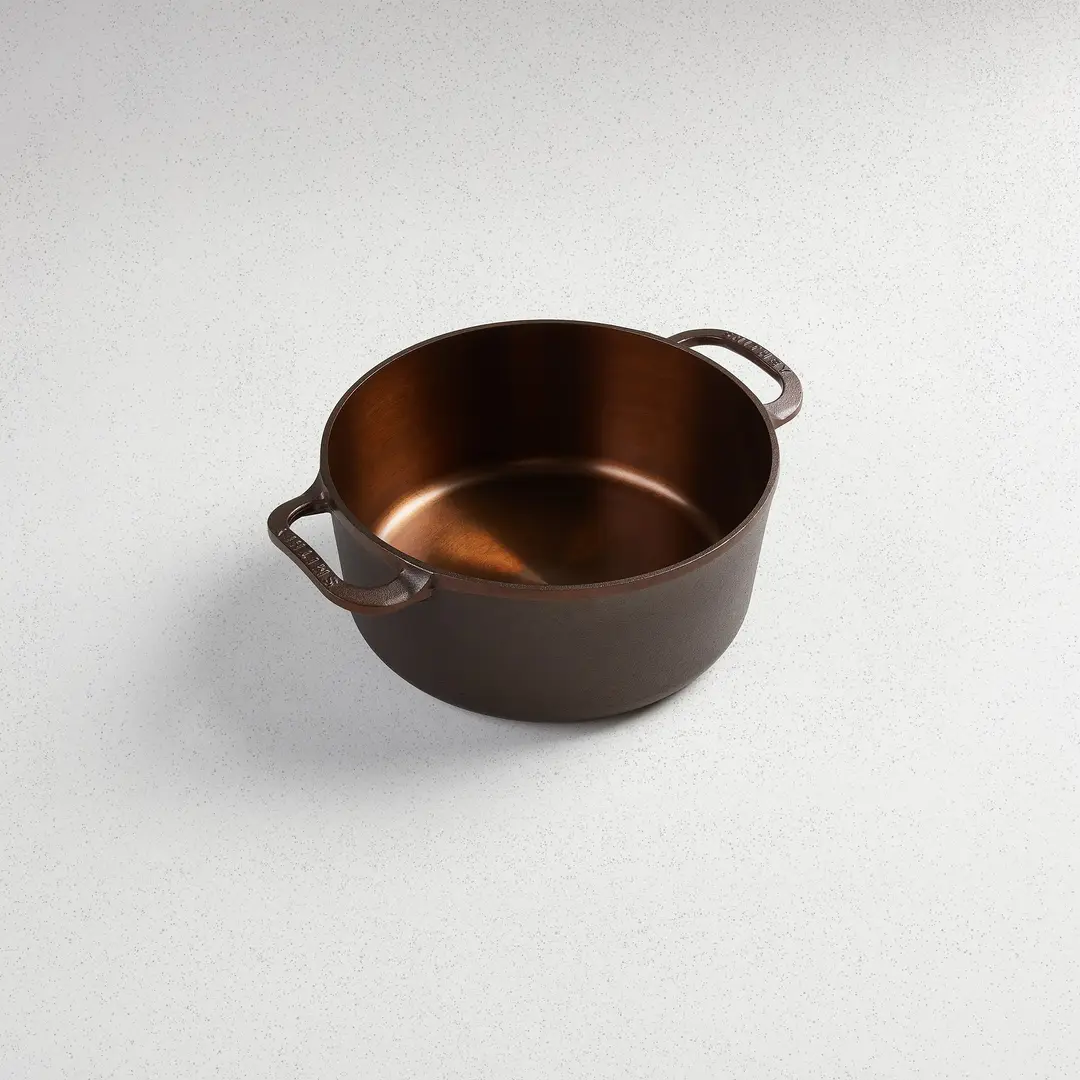
5.5 Qt Dutch Oven
$300
Polished all the way inside, so there is no enamel to chip or crack. Its lid is cut to double as a lid for the No. 10.
5.5 qt · 4.5” deep · about 14 lbs · domed lid with moisture channels
See the Dutch oven★★★★★
“Love it, this is my favorite daily driver and it lives on my stove. Eggs in the morning, might heat up some pastrami for lunch and who knows what is for dinner!”
Edward W., verified review of the Little Farmhouse Skillet, June 6, 2026. Published on smithey.com
What it still asks of you
Not much, and less than the folklore says. Wash it with warm water. Smithey’s own care guide says a few drops of dish soap will not hurt it, which settles an argument a lot of kitchens are still having. Dry it properly, and if you want to be sure, put it back on a warm burner for a minute to drive off the last of the water. Then a light film of neutral oil.
- SoapFine, a few drops
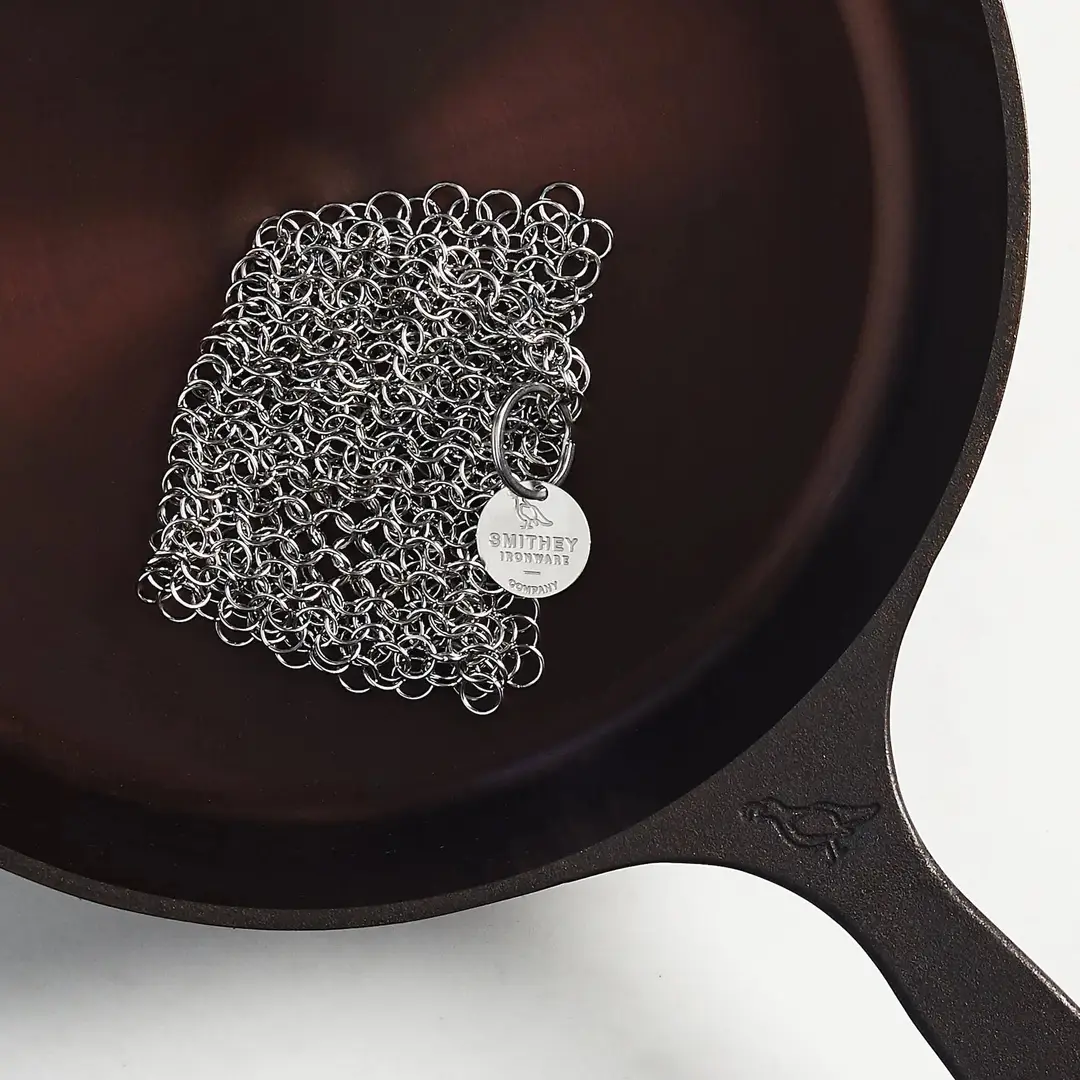
- Stuck-on foodMetal spatula or a chainmail scrubber, $20
- DryingTowel, then a warm burner if in doubt
- Re-seasoningThin oil, heat until it smokes, repeat
- Acidic foodFine, may lighten a young seasoning
- DishwasherNo
Source: Smithey care guide and seasoning guide, as published August 20, 2026.
The acidic food rule is the one that gets exaggerated. Tomatoes and wine can lighten the color of a young seasoning. On a pan with a few hundred meals behind it, you will not notice, and if you do, you put oil on it and heat it for ten minutes.

The pan on the stove is the one with the story
Every cast iron skillet ever made will outlive the person who bought it. That is not the achievement. Iron is just very good at being iron.
What is rare is a pan that earns its way onto the burner on an ordinary Tuesday, four hundred Tuesdays in a row, and comes out the other end darker and better than it went in. That pan ends up with a name attached to it. The one in the cabinet ends up at an estate sale with a price sticker on the handle.
The difference between them was decided by a machining step that costs money and does not show up in a photograph of the outside.
★★★★★
“I have been into cast-iron for about 20 years. Have 20 to 30 vintage cast-iron skillets that I have restored. Old-school to the core… But this new pan is something special. Performs well and feels like it has a soul.”
Matthew O., verified review of the No. 12 Skillet, December 31, 2020. Published on smithey.com